Yes, HEPA air purifiers work at what they are built to do, which is lowering the number of particles in the air of one room. A systematic review published in 2021 found portable purifiers reduced PM2.5 by 22.6% to 92.0% compared with control. EPA adds a limit: they “cannot remove all pollutants from the air.”
Health results are a separate question. That same review called the evidence on health “limited and inconsistent,” and EPA describes heart and lung improvements as typically small and not always noticeable. EPA’s advice also puts reducing the source first and filtration second. Buy one to lower particle levels in a room you use, and don’t expect it to act as medical care.
What a HEPA filter actually does
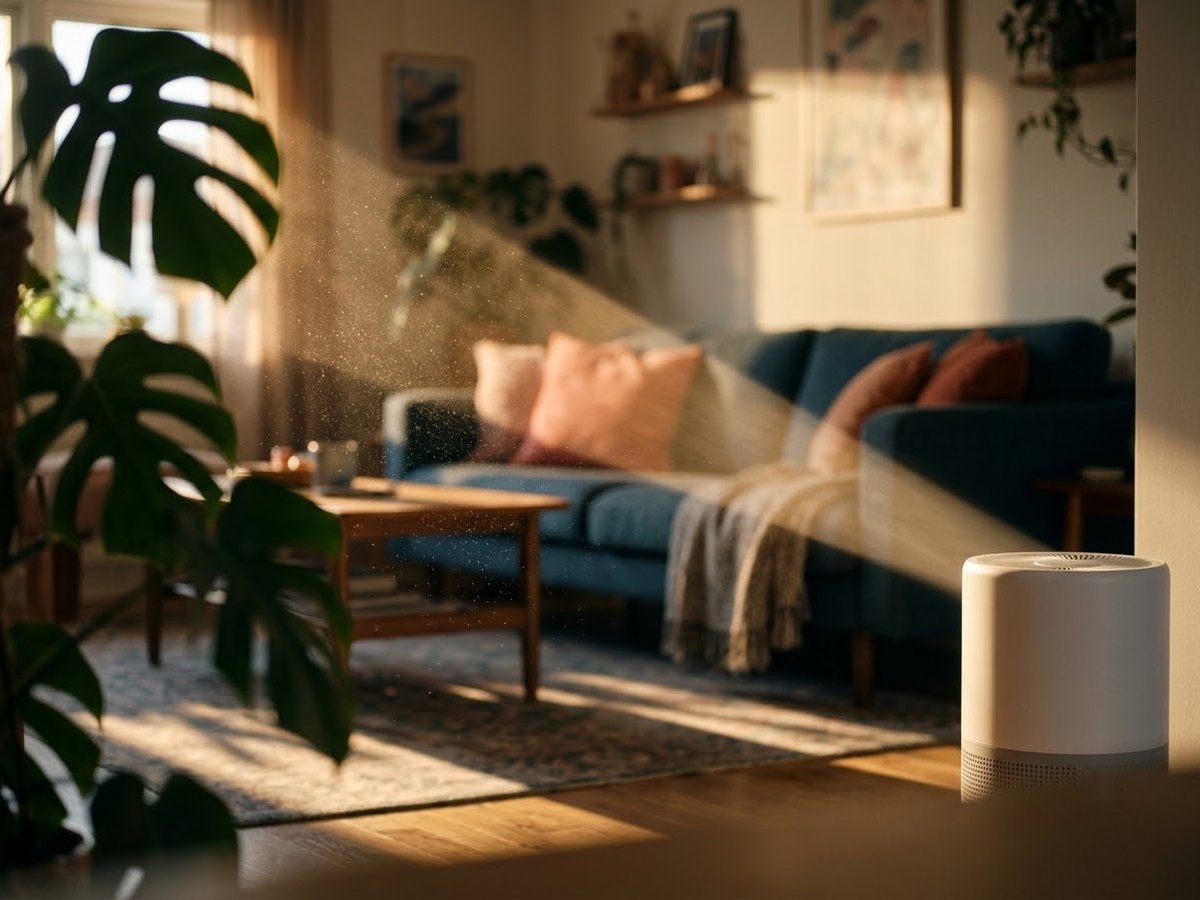
HEPA is a type of pleated mechanical filter, and EPA says the letters stand for “high efficiency particulate air.” As a physical filter, it works only on what passes through it.
EPA says a HEPA filter can theoretically remove at least 99.97% of particles at a size of 0.3 microns, including dust, pollen, mold and bacteria. EPA calls 0.3 microns the worst case, with larger and smaller particles trapped at even higher efficiency.
That figure describes a filter under a test. It says nothing about the air in your living room. What happens in a room depends on how much filtered air the machine delivers, which is what AHAM’s Clean Air Delivery Rate (CADR) scores. EPA says that rating covers particles only.
What the sources say a HEPA purifier can and cannot do
- Can: reduce indoor air pollution, EPA says, which for a HEPA filter means airborne particles such as dust and pollen.
- Cannot, on odors: Consumer Reports says mechanical filters, including HEPA, don’t help with gases or odors.
- Cannot, on surfaces: AAAAI says purifiers are “not efficient” at removing settled allergens on furniture, walls or floors.
- Cannot, on moisture: EPA says portable cleaners cannot solve mold problems, because mold is caused by water or moisture.
What the studies found in the air and in people
The research splits into two questions. Does the air change? Do people change? Read each row for what was actually measured.
| Study | What it measured | What it found |
|---|---|---|
| Systematic review, Science of the Total Environment, 2021 | PM2.5 and health | PM2.5 down 22.6% to 92.0% against control; health evidence “limited and inconsistent” |
| Meta-analysis, American Heart Journal Plus, 2022 | 14 sham-controlled trials, 778 people | PM2.5 down 61.5% on average; IL-6 13% lower and CRP 7% lower (borderline, p = 0.05) |
| Systematic review, Hypertension, 2020 | 10 trials, 604 people | Systolic blood pressure about 4 mm Hg lower over a median 13.5 days; no significant diastolic change |
| Crossover trial, Journal of Clinical Hypertension, 2026 | 33 older adults in a senior residence | Bedroom PM2.5 of 1.3 versus 8.3 µg/m3; average home systolic pressure did not differ |
| AIRWEIGHS trial, 2025 | 164 children with asthma | PM2.5 down 64.4% and PM10 down 54.7% more than placebo; “no observable benefit” in asthma outcomes |
The air results point one way. The health results do not. The blood pressure rows show this well: a 2020 review found a small drop, while a 2026 trial that lowered bedroom PM2.5 found no difference.
Reviews that pool the older work land on modest numbers. A 2013 review in Indoor Air put percentage improvements in health outcomes at “typically modest, for example, 7% to 25%.” EPA says the improvements it has seen are “not always noticeable to the individual.”
Why a purifier can fall short at home
A good filter in the wrong setup still does little. These are the common gaps, each from the source named:
- It is too small. Consumer Reports says it has tested many purifiers not suitable for their claimed room sizes. Our guide to HEPA air purifiers for large rooms sizes at 4.8 air changes for that reason.
- It is not running. EPA says the longer a unit runs and the higher its fan speed, generally the more air it filters. EPA also says people often switch units off to avoid the noise.
- The room is open. EPA says a portable cleaner will be much more effective for a room when exterior doors and windows are closed.
- Air can’t reach it. EPA says to keep the unit away from curtains and anything that might block airflow.
- The filter is overloaded. EPA says excessively loaded filters lose effectiveness through reduced airflow or more bypass around the filter.
- You expect it to reach the whole house. EPA says portable cleaners clean a single room, not an entire house, so place one where you spend the most time.
For a larger room · Premium price range
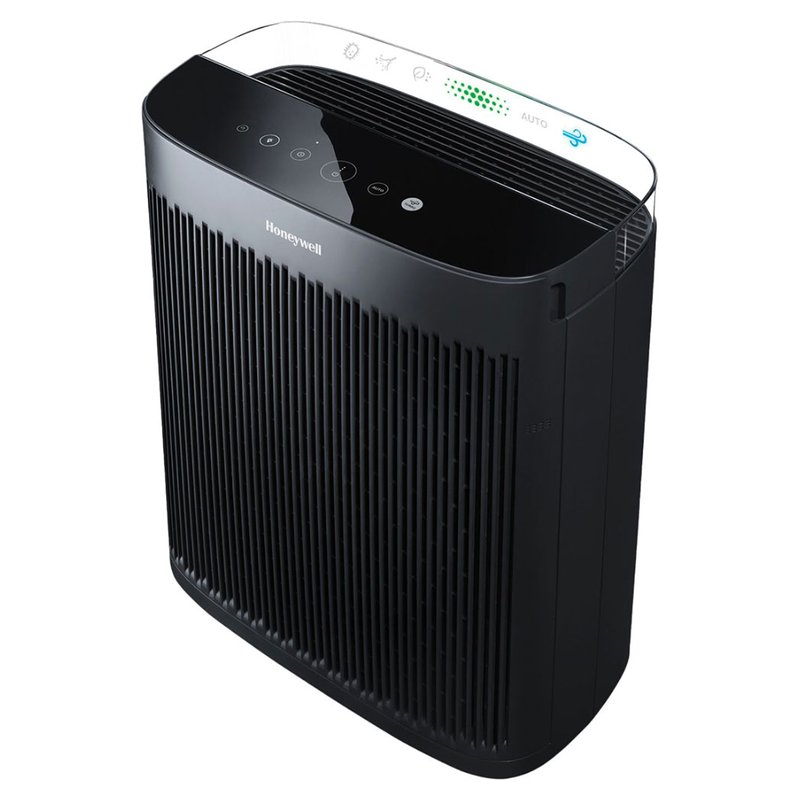
Honeywell HPA5300B
Honeywell rates it for 4.8 air changes in a 500 sq ft room, with a smoke CADR of 323, and says its filters are certified True HEPA. It has auto mode and no app.
See today’s price ›When one is worth buying
EPA calls filtration “an effective supplement to source control and ventilation,” and that wording is a useful test. A purifier earns its place after the source has been dealt with, or when the source is outside your control.
- Pollen, dust or dander in a room you use a lot. Evidence on symptoms is mixed, and our page on HEPA air purifiers for allergies lays out what the trials found.
- Wildfire smoke. AHAM recommends a smoke CADR equal to the room’s square feet for wildfire smoke, higher than its everyday sizing. See HEPA air purifiers for smoke.
- A bedroom. Mayo Clinic’s home allergy advice for the bedroom includes an air filter with a small-particle or HEPA filter.
It is a weaker buy if your main problem is a smell, because Consumer Reports says HEPA doesn’t help with gases or odors, and EPA says even carbon is not especially effective against formaldehyde or ammonia. It is also a weak buy for a damp room, where the water is the thing to deal with first.
Steer clear of ozone generators sold as air cleaners. EPA says no federal agency has approved them for occupied spaces, and that ozone does not remove particles such as dust and pollen.
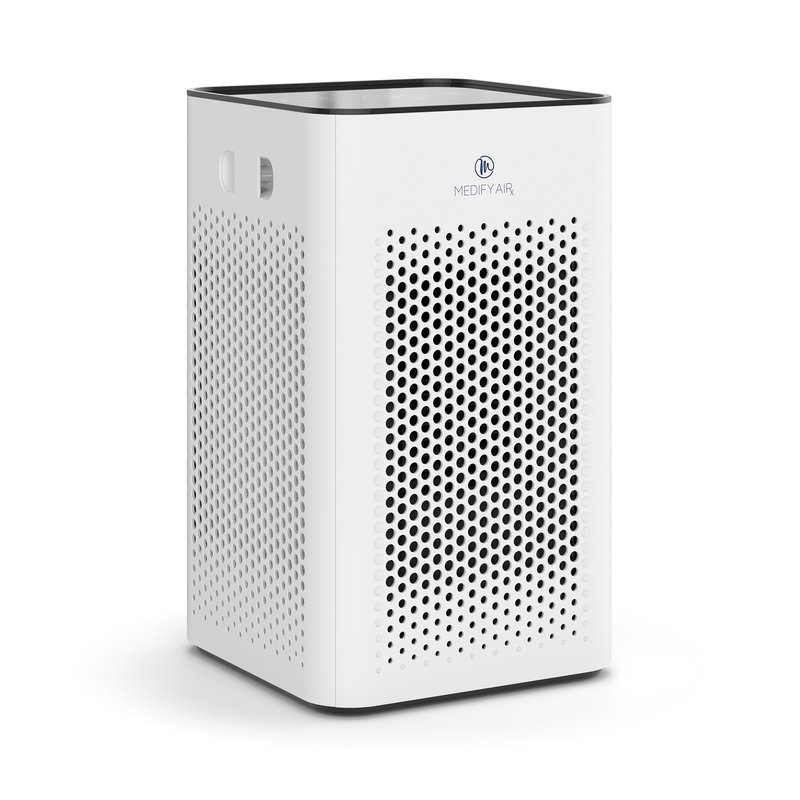
For a small room · Budget price range
Medify MA-25
Medify describes it as AHAM Verifide at 172 sq ft for 4.8 air changes and calls its filter “True HEPA technology.” Medify rates the filter set at 3 to 4 months, so plan for that cost.
See what’s in the box ›If you are buying because of symptoms such as coughing, wheezing or a blocked nose, see a doctor if they persist or get worse, and keep following any asthma action plan. A purifier is not a substitute for care.
What the labels on the box do not tell you
Several familiar marks answer narrower questions than shoppers assume.
- ENERGY STAR covers energy use. EPA says the label does not refer to air-cleaning effectiveness in any way.
- CARB certification covers electrical safety and low ozone emissions. CARB says it does not evaluate how well a cleaner removes pollutants.
- AHAM’s verified CADR is the closest to a performance number. AHAM says listed models are verified at a third-party lab, and Consumer Reports describes the program as voluntary.
- EPA itself says it does not certify or recommend specific brands or models.
Honest note
A purifier adds a running cost and a noise source. ENERGY STAR says a standard room air cleaner running continuously uses about 394 kWh a year, more than some new refrigerators. Consumer Reports says replacement filters in its tests of large purifiers cost from $20 to more than $200. We have not tested or used these air purifiers ourselves; specs are the brand’s own, and test results belong to the publisher named.
Questions people ask
Do HEPA air purifiers really clean the air?
Yes, for particles. A 2021 systematic review found portable purifiers reduced PM2.5 by 22.6% to 92.0% compared with control, and a 2022 meta-analysis of sham-controlled trials found a 61.5% average reduction. EPA still says they cannot remove all pollutants from the air.
Will an air purifier improve my health?
Nobody can promise that. EPA says several studies found small improvements in heart and lung health that are not always noticeable, and a 2021 review called the health evidence limited and inconsistent. Lower particle counts are not the same thing as fewer symptoms.
Does a HEPA purifier remove smells?
Not by itself. Consumer Reports says mechanical filters, including HEPA, don’t help with gases or odors. A carbon filter handles some of them, and EPA says carbon works best in quantity, though it is not especially effective against formaldehyde or ammonia.
Does one air purifier clean the whole house?
No. EPA says portable air cleaners are used to clean a single room, not an entire house, and a 2011 review in Current Allergy and Asthma Reports says their effectiveness is limited to one room. Start with the room you spend the most time in.
How long should I run a HEPA air purifier?
Consumer Reports says purifiers should run at all hours to be effective, using high speed when you are out of the room and low when you are nearby. EPA says that the longer a unit runs, generally the more air it filters.
Read first: best HEPA air purifier · hepa air purifiers for allergies
Sources: EPA: Guide to air cleaners in the home · EPA: Air cleaners and air filters in the home · Systematic review, Science of the Total Environment, 2021 · Meta-analysis, American Heart Journal Plus, 2022 · AIRWEIGHS trial, 2025 · Consumer Reports: Air purifier buying guide
This article is general information, not medical advice. An air purifier does not treat allergies, asthma or any other condition; talk to your doctor about symptoms, and follow the maker’s instructions for use and filter changes. Specifications are each brand’s own.