
Best HEPA Air Purifier · Mold

Best HEPA Air Purifier for Mold

No air purifier solves a mold problem: EPA says to fix the moisture and clean up the mold first. For airborne spores afterward, our pick is the Coway Mighty2. EPA says a HEPA filter can theoretically remove at least 99.97% of airborne particles at 0.3 microns, including mold. It catches what is in the air, not what is growing on the wall.

General information, not medical advice

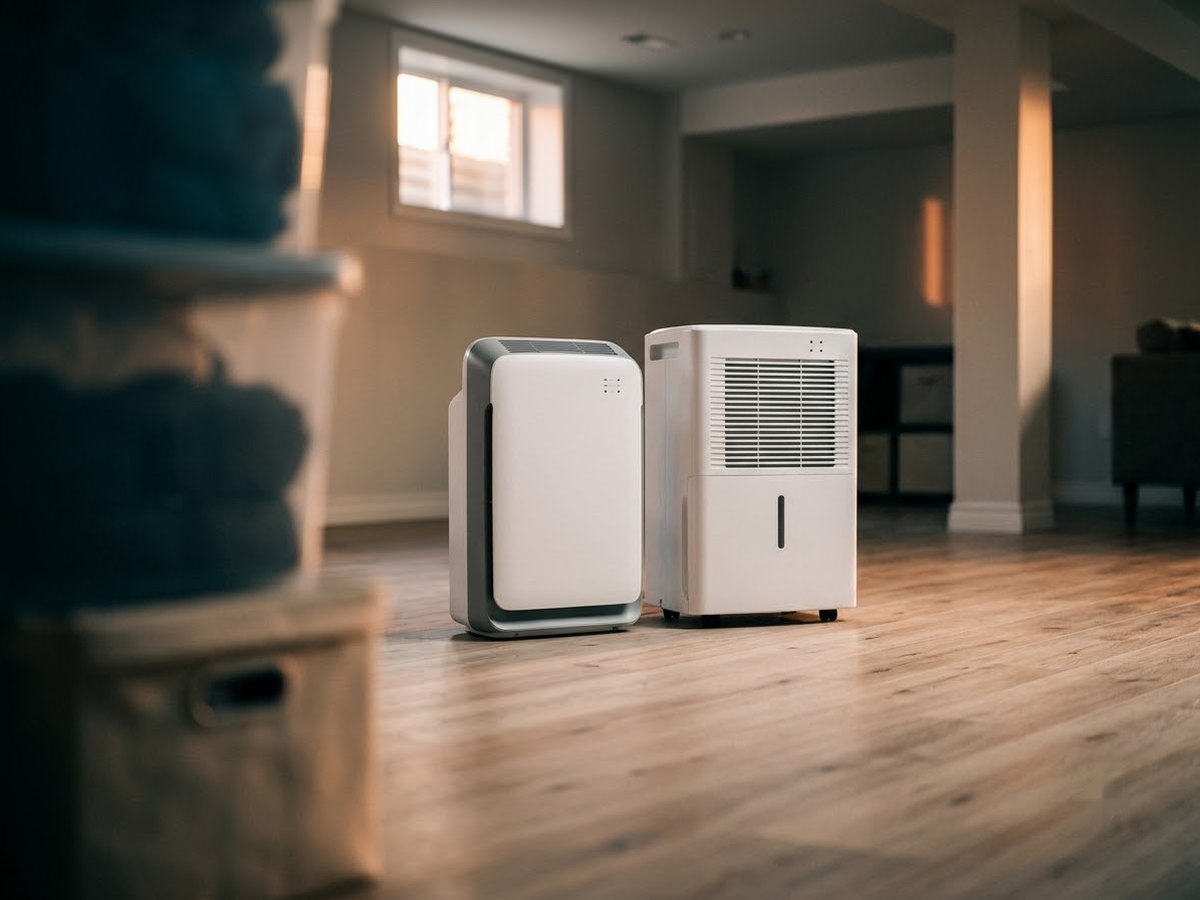
Plain air purifier and plain dehumidifier side by side in a clean basement with low window light

Our top 3

Top picks at a glance

Best overall for spores#1
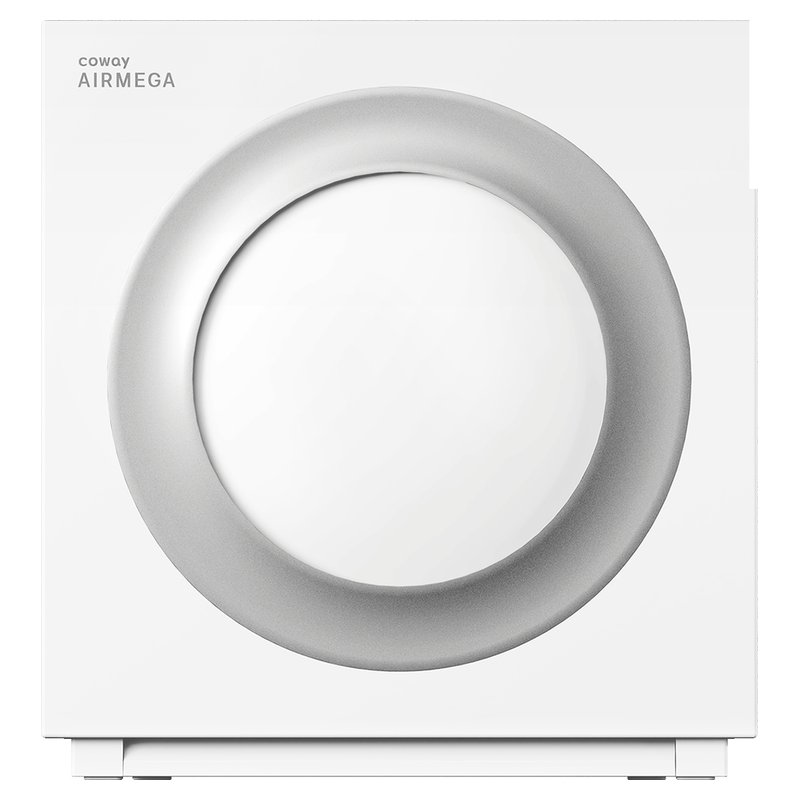
Coway Airmega Mighty2 (AP-1512N) air purifier

Coway Airmega Mighty2 (AP-1512N)

Mid-range price range

Smoke CADR of 240, no ionizer listed, and carbon that may help with musty odors. Coway says HEPA; HouseFresh says HEPA-grade only in sleep mode.

See details ›
Best large-room choice#2
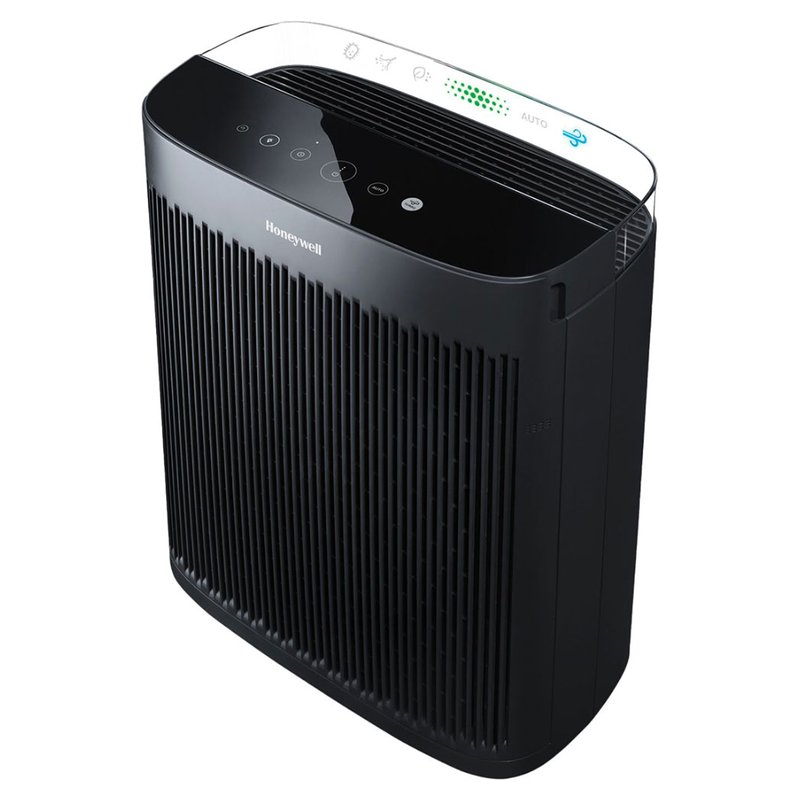
Honeywell HPA5300B air purifier

Honeywell HPA5300B

Premium price range

Certified True HEPA filters by Honeywell’s wording, rated for 500 sq ft at 4.8 air changes.

See details ›
Best simple pick#3
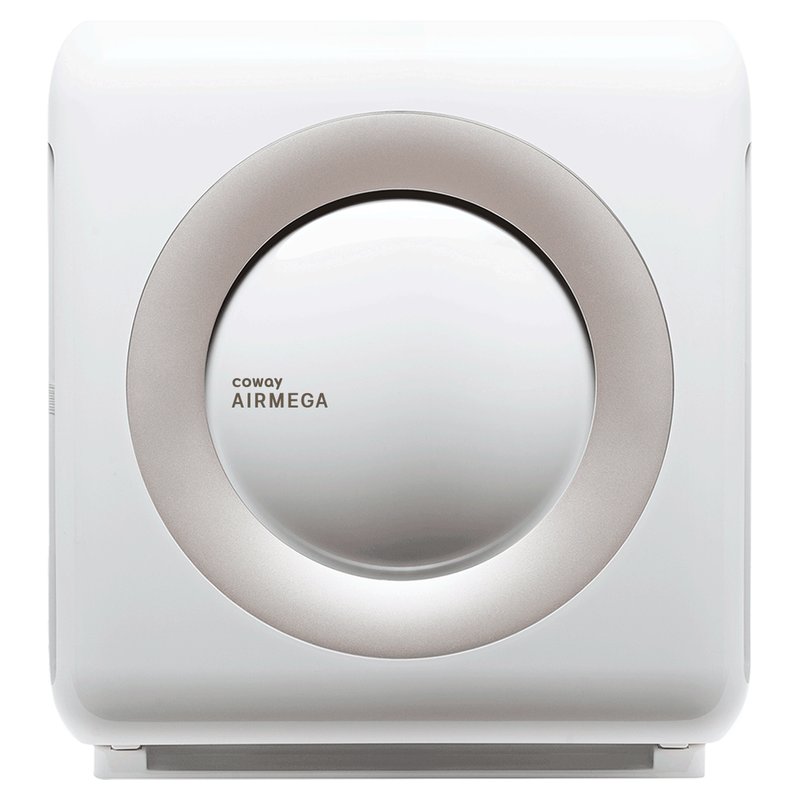
Coway Airmega Mighty (AP-1512HH) air purifier

Coway Airmega Mighty (AP-1512HH)

Mid-range price range

NBC Select’s medium-room pick. Its ionizer turns off with a button, though HouseFresh says the listed CADR relies on it.

See details ›

In detail

Who each one suits

Specifications are each brand’s own unless we name another source. Test results belong to the publication we name. We did not lab-test these air purifiers.

Best overall for spores#1

Coway Airmega Mighty2 (AP-1512N)

For a mid-sized room, this is where we would start. Coway lists a smoke CADR of 240, a range of 19 to 50 dB and no ionizer in the filter stack. HouseFresh, which buys and measures its own units, names it best for most people; RTINGS says it cleans about as well as the Winix 5530 but typically costs more.

Why it stands out

  • Coway says the Max2 filter (activated carbon + HEPA) captures over 99.97% of 0.3-micron particles.
  • HouseFresh chose it over the Levoit Vital 200S for better cleaning at top speed and at speeds under 45 dBA.
  • CARB-certified as a mechanical air cleaner, with a laser sensor and an auto mode. Coway rates the filter for up to 12 months; HouseFresh says the carbon fills in 6 to 9 months.
Filter (brand’s wording)Max2: activated carbon + HEPA
Room size at 4.8 air changes372 sq ft (smoke CADR × 1.55)
Smoke CADR240
Noise (brand)19–50 dB
Ionizer or UVNone listed

Good fit if

  • Your room is about 370 sq ft or smaller.
  • You want quiet running and no ionizer.
  • You care about light odors: HouseFresh notes pelleted carbon, not the older Mighty’s carbon fabric.

Skip it if

  • You want an app: it has none.
  • You want a filter labeled HEPA at every speed: HouseFresh describes it as HEPA-grade only in sleep mode.
  • Price per CADR comes first: RTINGS points to units like the Levoit Core 600S at this price.

The 372 sq ft figure is our arithmetic from AHAM’s formula (smoke CADR × 1.55). Coway itself lists 450 sq ft in 15 minutes and 1,800 sq ft at one air change per hour.
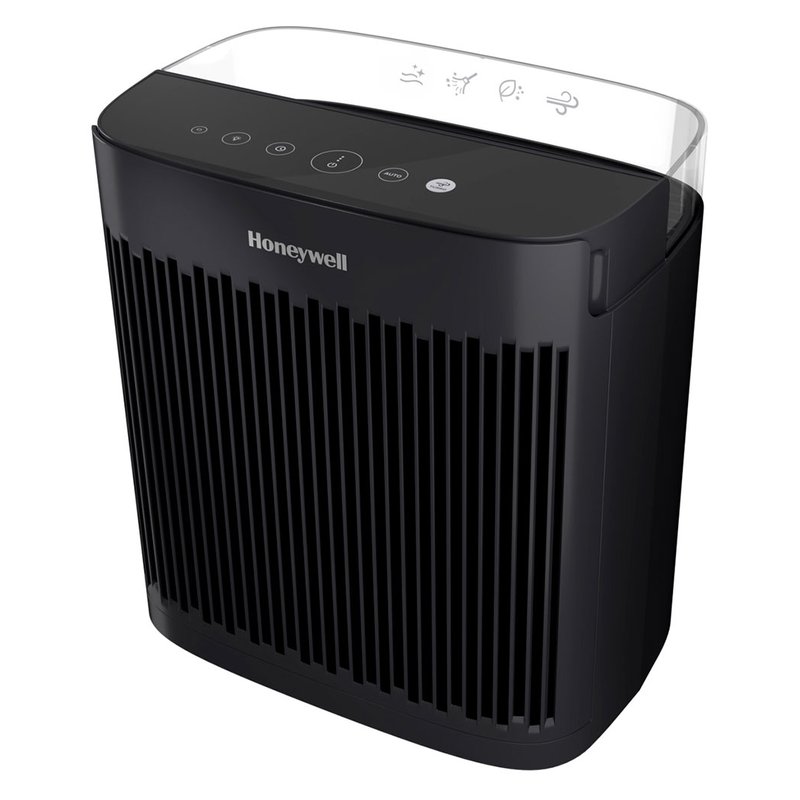
Best large-room choice#2

Honeywell HPA5300B

The large-room HEPA pick. Honeywell rates it for 4.8 air changes in a 500 sq ft room with an AHAM-based smoke CADR of 323, and says its filters are certified True HEPA. It has auto mode with VOC sensing and a color display, but it is heavy at 27 lb and has no app.

Why it stands out

  • Honeywell says the True HEPA R filter helps capture up to 99.97% of 0.3-micron particles; the unit uses three of them, replaced every 12 months.
  • Honeywell says its HEPA purifiers use filtration that does not release ozone.
  • ENERGY STAR label and a five-year limited warranty.
Filter (brand’s wording)“Certified True HEPA” + odor pre-filter
Room size at 4.8 air changes500 sq ft
Smoke CADR323
Noise (brand)No dB published
Ionizer or UVNone stated

Good fit if

  • Your room is up to about 500 sq ft.
  • You want a brand-stated HEPA filter in a large-room unit.
  • You want auto mode without an app.

Skip it if

  • You want an app.
  • You want published decibel figures: Honeywell only says about a whisper on low and a normal conversation on high.
  • You will move it often.
Best simple pick#3

Coway Airmega Mighty (AP-1512HH)

The older Mighty is still on sale after the Mighty2 replaced it. Its numbers are close: Coway lists a smoke CADR of 233 and 361 sq ft at 4.8 air changes. NBC Select names it best for medium rooms. It suits buyers who can catch one of its markdowns. It has an ionizer you can switch off, though HouseFresh says the listed CADR relies on the ionizer plus HEPA, so it may not hold with it off.

Why it stands out

  • Coway lists HEPA and deodorization filters plus a pre-filter.
  • Auto and Eco modes, with no app to set up.
  • Coway’s manual says it complies with the 0.050 ppm ozone limit, and a button turns the ionizer off.
Filter (brand’s wording)HEPA + deodorization filter
Room size at 4.8 air changes361 sq ft
Smoke CADR233
Noise (brand)24–53 dB
Ionizer or UVIonizer, can be turned off

Good fit if

  • You want simple controls for a medium room.
  • You find it marked down below the Mighty2.

Skip it if

  • You want the newer design: HouseFresh calls it “a little dated.”
  • You don’t want a six-month deodorization filter cycle, or high-speed noise bothers you.
Also worth a look

Honeywell HPA5100B

A simple True HEPA unit with no app and no sensor. Honeywell describes it as using certified HEPA filters, rated for 4.8 air changes in a 190 sq ft room, and it has earned the ENERGY STAR label. A five-year limited warranty is longer than most in this tier.

Why it stands out

  • Honeywell says the True HEPA R filter helps capture up to 99.97% of 0.3-micron particles.
  • The HEPA filter is replaced once a year and the pre-filter every three months, according to Honeywell.
  • Honeywell lists a smoke CADR of 114.
Filter (brand’s wording)“Certified True HEPA” + odor pre-filter
Room size at 4.8 air changes190 sq ft
Smoke CADR114
Noise (brand)No dB published
Ionizer or UVNone stated

Good fit if

  • Your room is about 190 sq ft or smaller.
  • You want HEPA wording from the brand and manual controls.

Skip it if

  • You want auto mode: the larger HPA5300B has one.
  • You want published noise numbers or an app.

Fix the water first

EPA says the key to mold control is moisture control. Once that is done, a HEPA purifier can catch some of the particles left in the air.

Read buyer reviews ›

Tips

Three things that make the difference

01

Hold humidity down

EPA advises keeping indoor humidity below 60 percent, ideally 30 to 50 percent, using air conditioners or dehumidifiers when needed.

02

Clean, don’t just kill

EPA says dead mold may still cause allergic reactions in some people, so it is not enough to kill it. It must also be removed.

03

Be wary of “best for mold” claims

We use that phrase because people search for it, but EPA says portable air cleaners do not address the cause of mold. Look for HEPA and a suitable CADR, and ignore promises beyond that.

Honest note

We found no controlled trial showing that a home purifier reduces mold-related symptoms. EPA says purifiers may remove some particles generated by mold and may help reduce odors, but will not resolve a mold and moisture problem. If you have visible growth or a persistent musty smell, deal with that before spending money here.

FAQ

Questions people ask

Do HEPA air purifiers remove mold spores?

They can capture spores that are in the air. EPA lists mold among the particles a HEPA filter can theoretically remove at 0.3 microns and larger, and AAFA says HEPA filters effectively remove mold spores. They do nothing about mold growing on surfaces, which EPA says you must clean up.

Can an air purifier get rid of mold?

No. EPA says portable air cleaners and HVAC filters do not address the cause of mold and musty odors. To solve the problem, EPA says to get rid of the source of the moisture and clean up the mold. A purifier can only follow that step.

Air purifier or dehumidifier for mold?

They do different jobs, and moisture comes first. A dehumidifier removes water from the air, while a purifier captures particles. EPA says controlling moisture will control mold growth. We found no head-to-head test, because the sources treat them as complementary. A damp basement usually needs the dehumidifier first.

Will a purifier remove a musty smell?

It may reduce it, but the cause stays. EPA says these devices may help reduce odors, and carbon is the part that handles gases. EPA adds that thin carbon layers can saturate quickly. If the smell returns, there is probably still moisture or mold behind it.

Does killing mold with UV or ozone help?

Ozone is not the answer. EPA says ozone at levels meeting health standards does not effectively remove mold or other biological pollutants, and that typical home UV cleaners do not deliver enough dose to kill most airborne microorganisms. EPA also says dead mold may still cause allergic reactions.

How humid should my home be?

EPA advises below 60 percent, ideally between 30 and 50 percent. Mayo Clinic’s bedroom allergy advice is at or below 50 percent. A cheap humidity meter tells you where you stand. AAFA also says to fix all leaks and other causes of damp areas.

Dry it out, clean it up, then filter what is left

Want the full picture? See our best HEPA air purifier, compared by room size and filter, and the FAQ on sizing, ozone and running costs.