True HEPA is a consumer label for a filter sold as real HEPA, and HEPA-type is a label for one that has not been certified to that standard. Digit describes True HEPA as a term used to separate HEPA filters from HEPA-type products, and Consumer Reports says HEPA-type filters haven’t been certified to true HEPA requirements. The benchmark comes from a U.S. Department of Energy standard: at least 99.97% at 0.3 micrometer.
Neither label tells you how the finished machine performs. EPA says there is no widely accepted definition of HEPA performance in consumer products, and CARB says high-efficiency filters are “sometimes mistakenly called HEPA or True HEPA.” Read the brand’s exact wording, then check for a verified CADR.
Where the 99.97% number comes from
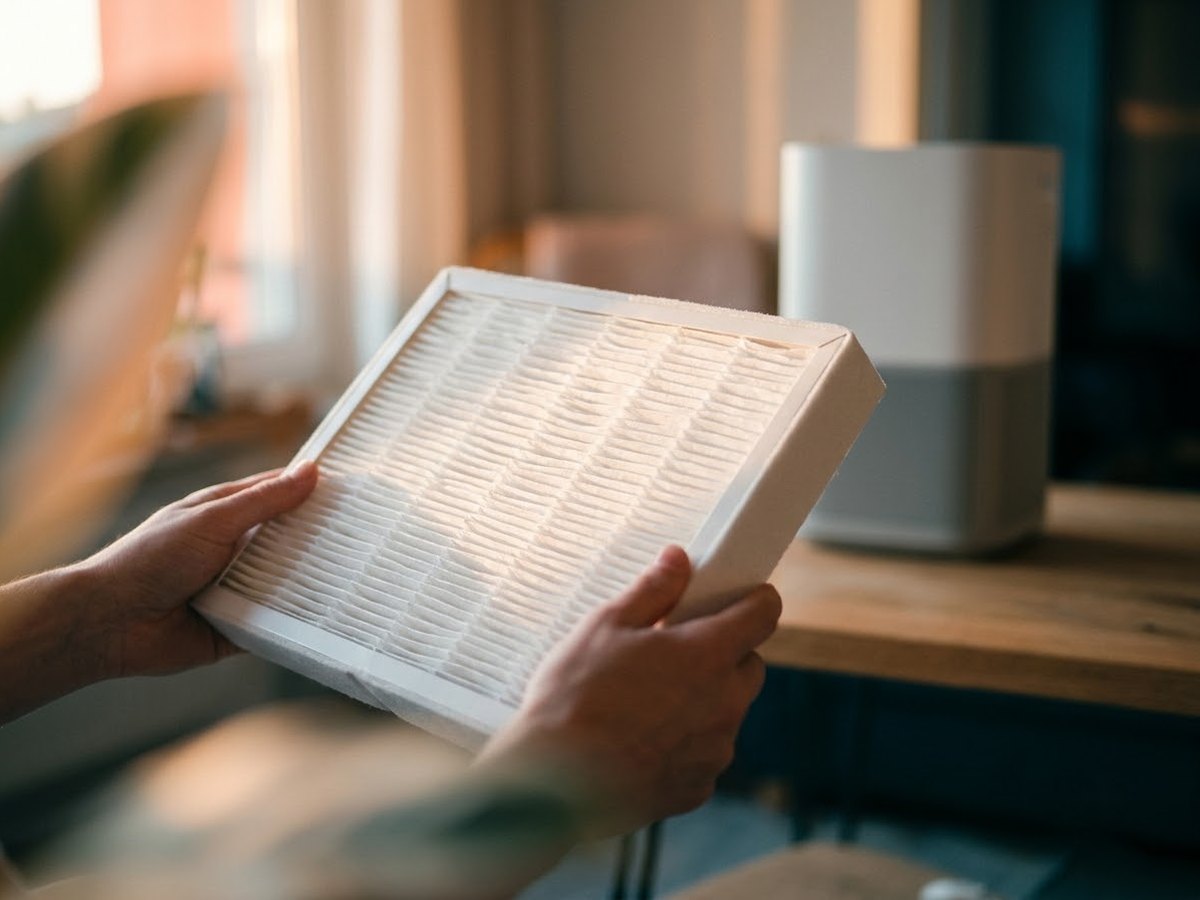
DOE-STD-3020-2005, as reproduced online, defines a HEPA filter as a throwaway, extended-media, dry filter with a rigid casing and a minimum efficiency of 99.97% at a 0.3-micrometer test aerosol. EPA says the U.S. Department of Energy is the official source of the HEPA definition.
EPA says 0.3 microns is the most penetrating particle size, the worst case, with larger and smaller particles trapped at higher efficiency. A NASA technical memorandum gives a different figure, saying that size is “typically 120 nm” for HEPA media, although the same paper also refers to 0.3 µm. Either way, the number is a lab benchmark for the filter.
It is not a description of your room. A filter rated at 99.97% does not mean 99.97% of the pollen in your home is gone. Our earlier guide on whether HEPA air purifiers work covers what studies measured in real rooms.
Two more grades you will see
- H13 and H14: under EN 1822, filter maker MANN+HUMMEL says H13 requires at least 99.95% integral efficiency and H14 at least 99.995%. Digit says the words True HEPA imply no H13 or H14 class.
- MERV: the sources differ. EPA says residential HEPA filters are generally equivalent to MERV 16; Harvard’s Healthy Buildings Program says HEPA filters are equivalent to MERV 17 to 20.
HEPA, True HEPA and HEPA-type compared
Each term below comes from a different source, so they aren’t interchangeable.
| Term | What the source says | What to take from it |
|---|---|---|
| HEPA (technical) | NASA says 100% of HEPA filters are tested and individually certified, and that most test standards require this | A specific tested standard for the filter |
| HEPA on a home product | EPA says home filters are unlikely to equal HEPA systems in health care and industry, though they usually still remove 99% or more at the sizes tested | Often close, not identical |
| True HEPA | Digit calls it a broader consumer term; CARB says the name is sometimes applied by mistake | Check for a stated test or certification |
| HEPA-type, HEPA-like | Consumer Reports says not certified, but may still perform adequately in its tests | Not automatically bad; look at CADR |
Vacuum Wars, writing about vacuum cleaners rather than air purifiers, says HEPA-type and HEPA-like have no official definition and can appear in marketing even if a filter misses 99.97%.
An executive at Rensa Filtration, quoted by NBC Select, puts it this way: “HEPA isn’t a centrally regulated standard.” That is an industry voice, so weigh it as one opinion alongside EPA’s statement above.
What brands actually call their filters
The wording varies more than the shelf labels suggest. Here is what each brand’s own page or manual says, with outside comments where a publisher disagrees.
| Model | The brand’s words | Worth knowing |
|---|---|---|
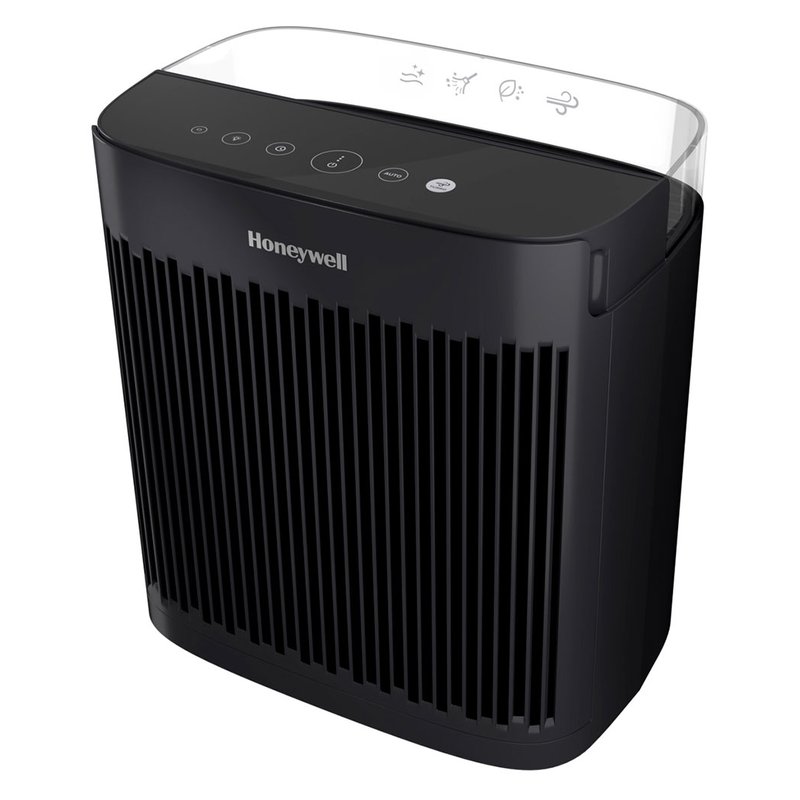
| Honeywell HPA5300B | “Certified Honeywell True HEPA R”; helps capture up to 99.97%, 0.3 microns and larger | Uses three of these filters |
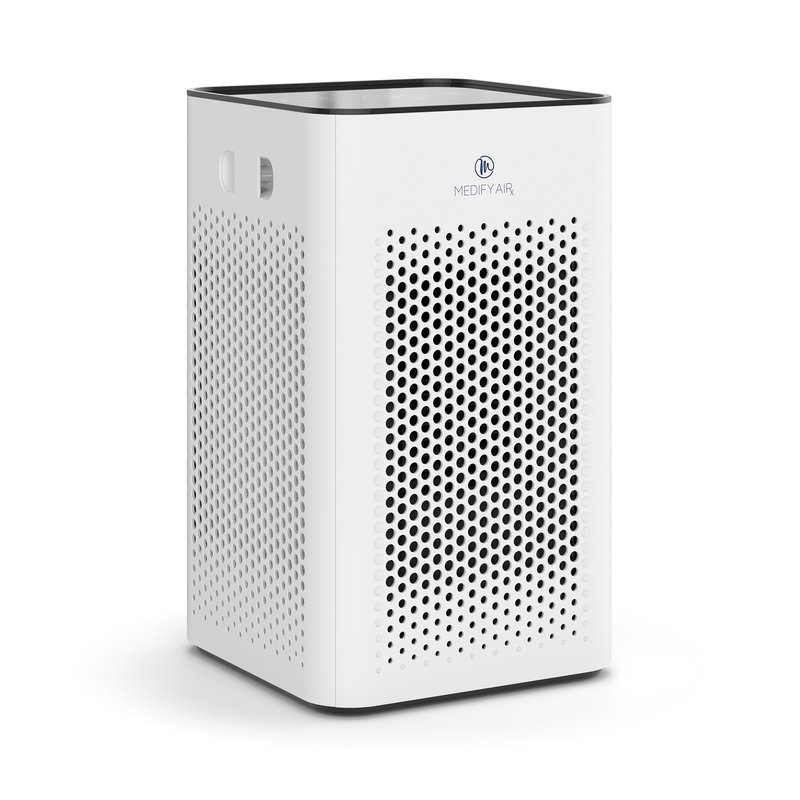
| Medify MA-25 | “True HEPA technology”; “HEPA filter material” down to 0.3 microns | HouseFresh describes H13 down to 0.1 microns; H13 is not on the current page |
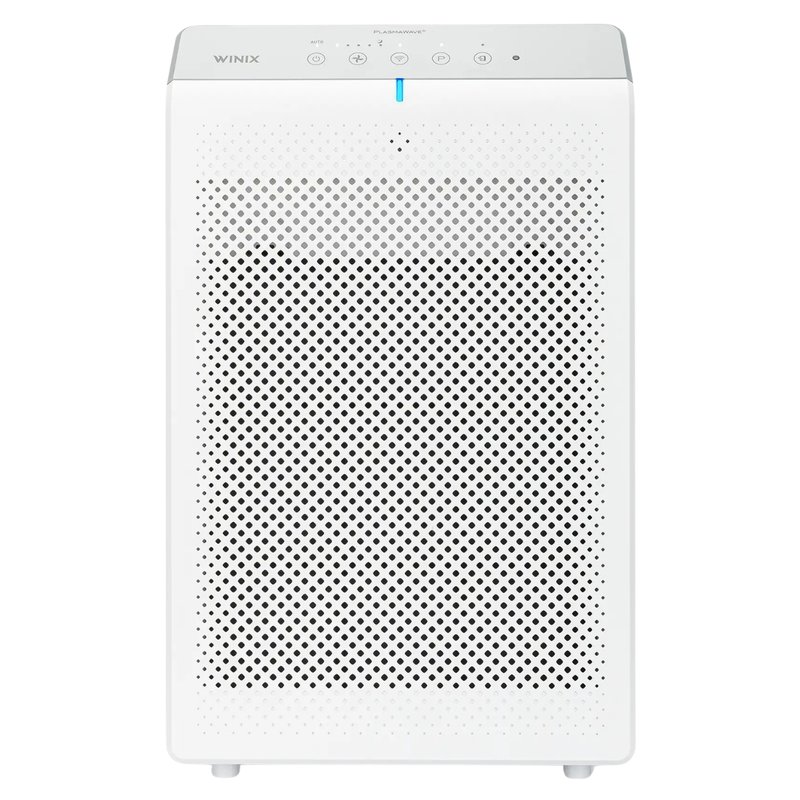
| Winix 5530 | “True HEPA Filter” in the manual | RTINGS says it isn’t HEPA certified |
| GermGuardian AC4825E | “True HEPA”; 99.97% as small as 0.1 microns | Footnote reads “Initial efficiency value” |
| Shark HP302 | “True HEPA Multi-Filter”; 99.98% of 0.1 to 0.2 microns | Based on IEST-RP-CC007.3 |
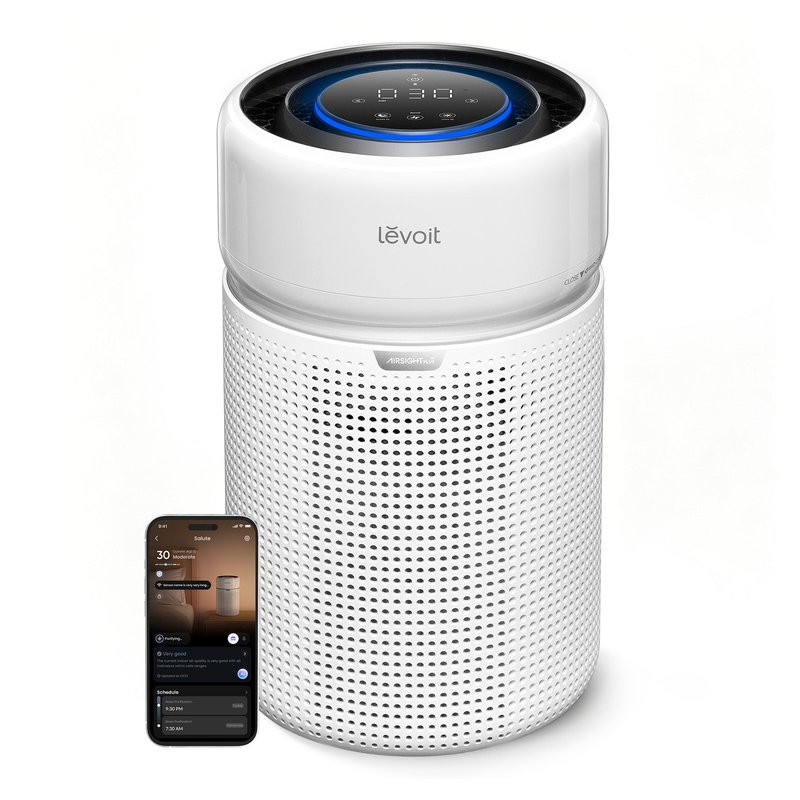
| Levoit Eleva 300X | “System-Level HEPA Filtration”; 99.97% of 0.3 microns | Levoit cites ASTM F3150-18, with third-party testing |
| Coway Mighty2 | Activated carbon + HEPA; over 99.97% of 0.3 microns | HouseFresh calls it HEPA-grade only in sleep mode |
| Levoit Vital 200S-P | HEPA-grade “while operating in Sleep Mode” | HouseFresh says the particle filter is not HEPA-grade |
| Levoit Core 600S-P | “3-Stage HEPA-Grade” replacement filter | HouseFresh says it is not rated HEPA |
| Levoit Core 300-P | “3-stage filtration system” | The page does not say HEPA for the main filter |
True HEPA in the manual · Mid-range price range
Winix 5530
A useful example of label and test pulling apart: Winix calls the filter True HEPA, RTINGS says it isn’t HEPA certified, and RTINGS still names it best for most people. Sylvane lists a smoke CADR of 253.
View product details ›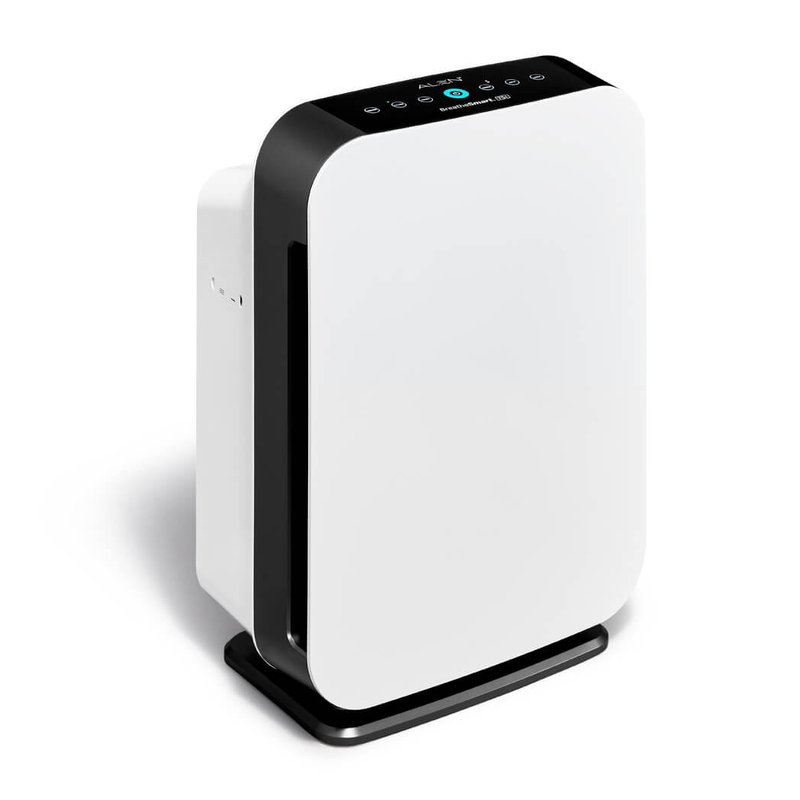
Names the class · Premium price range
Alen BreatheSmart 75i
Alen calls the main filter “True HEPA (H13)” and uses “medical-grade” in its FAQ; both phrases are Alen’s own. Alen lists 375 CFM on Turbo.
See today’s price ›The filter is not the whole machine
A filter’s rating is not a rating of the machine around it. EPA lists bypass airflow around a filter from poor installation as a factor in filter performance.
IQAir, which sells purifiers, says a filter’s HEPA rating does not necessarily show how the finished unit performs, and that no universal rule requires household purifiers to be independently tested as complete units. That is a brand’s statement.
A 2021 Delos press release reported that a lab it hired measured five consumer purifiers with HEPA filters at whole-device efficiencies from 99.16% down to 81.83% at 0.3 micron. Delos recommends a competing device, so read that as a brand-sponsored claim.
The most useful whole-unit figure for shoppers is CADR. AHAM says models in its directory are verified at a third-party lab, and EPA notes that a high CADR can come from HEPA or from other technologies. Our budget HEPA air purifier comparison sets filter wording next to room size for that reason.
What to check on a product page
- The exact word. HEPA, True HEPA, HEPA-grade, HEPA-type and “3-stage” are all different statements, so read them as written.
- The test behind the number. Look for the particle size and the footnote. Shark’s 99.98% rests on IEST-RP-CC007.3; GermGuardian’s footnote says “Initial efficiency value.”
- Whether the claim covers every speed. Levoit limits its HEPA-grade wording on the Vital 200S-P to Sleep Mode.
- A verified CADR and room size. Consumer Reports says you can trust the AHAM seal for the suggested room size, and to be wary of makers’ own claims. See HEPA air purifiers for large rooms for sized examples.
- Add-ons. EPA says ionizers, plasma and some UV lights may in some cases emit ozone. A plain filter doesn’t need them.
- A separate plan for smells. Consumer Reports says HEPA doesn’t help with gases or odors; that is carbon’s job.
Honest note
A filter label and real cleaning are separate questions. TechGearLab says the Levoit Core 300-P, whose page doesn’t say HEPA, performed almost as well as units costing two to three times more, while HouseFresh says it lags newer models. Wording on a page can also change, so check the listing you buy. We have not tested or used these air purifiers ourselves; specs are the brand’s own.
Questions people ask
Is True HEPA better than HEPA?
Not by definition. Digit describes True HEPA as a broader consumer term used to distinguish a HEPA filter from HEPA-type products, with no H13 or H14 class implied. Compare the stated particle size, the test named in the footnote and a verified CADR instead of the adjective.
Is a HEPA-type filter bad?
Not necessarily. Consumer Reports says HEPA-type or HEPA-like filters haven’t been certified to true HEPA requirements but may still perform adequately in its tests. You are giving up the certification, so a verified CADR matters more when you are comparing these models.
Does a True HEPA purifier remove 99.97% of particles in my room?
No. EPA ties that figure to the filter at 0.3 microns, and to a theoretical capture rate. Real rooms have open doors, new particles and limited airflow. A 2021 review found PM2.5 reductions ranging from 22.6% to 92.0% across studies of portable purifiers.
What does H13 mean on an air purifier?
H13 is a class under the European EN 1822 standard. Filter maker MANN+HUMMEL says it requires at least 99.95% integral efficiency, and H14 at least 99.995%. Medify’s MA-25 page doesn’t use H13, while Alen’s 75i page says True HEPA (H13).
Can I wash a True HEPA filter?
Follow your maker’s manual. Winix’s 5500-2 manual says its True HEPA filter can not be washed. Smart Air, a purifier brand, reports its own test in which washing three dirty HEPA filters raised airflow but sharply lowered capture at 0.3 microns.
Read first: best HEPA air purifier · budget hepa air purifiers
Sources: EPA: What is a HEPA filter? · EPA: Residential air cleaners, technical summary · Consumer Reports: Air purifier buying guide · CARB: Air cleaning devices for the home · Digit: What HEPA, H13, H14 and True HEPA labels mean · NASA technical memorandum on HEPA media
This article is general information, not medical advice. An air purifier does not treat allergies, asthma or any other condition; talk to your doctor about symptoms, and follow the maker’s instructions for use and filter changes. Specifications are each brand’s own.